
More than Accessible: Creating Truly Inclusive School Playgrounds
An inclusive playground goes beyond basic accessibility compliance to provide a space that better serves all children and families. A truly inclusive playground is where friendships take root, communities come together, and the next big adventure is always a hop, skip, and a laugh away.
Building a playground requires a more thoughtful approach to every aspect of the project, especially the design. Your goal should be to create an environment where children of diverse abilities, ages, and developmental stages can participate together as much as possible.
Accessible vs. Inclusive Playgrounds
While the two terms are sometimes used interchangeably, they have different meanings in playground design. Inclusive playgrounds are always accessible. However, not all accessible playgrounds are inclusive. The differences between the two include:
- Scope of access: Accessible playgrounds focus mainly on physical access, while inclusive playgrounds expand to include holistic access. For instance, a child who uses a wheelchair can move freely around an accessible playground structure, but inclusive design means they can play on it with their friends.
- Design philosophy: The driving force behind most accessible playgrounds is compliance with regulatory standards, such as the ADA. On the other hand, inclusive playgrounds operate under a universal design philosophy, aiming to create spaces where children feel welcome, safe, and valued.
- Nature of interaction: Inclusive playgrounds are intentionally designed to promote collaborative play and interaction between children of all abilities. This is not always the case with accessible playgrounds, where children with disabilities may only be able to play alongside their peers on separate accessible play equipment.
What Makes Playgrounds Inclusive?
An inclusive playground invites children on adventures big and small — exploring, climbing, laughing, and learning together, no matter their abilities or backgrounds. It’s a space designed to help each child grow into an everyday hero, connect with the world around them, and dream up new possibilities.
The following are key elements that make a playground truly inclusive.
Physical Inclusion
Physical inclusion sets the stage for grand adventures by giving each child an opportunity to explore. Here’s what physical inclusion typically encompasses in playground design:
- Barrier-free access: An inclusive playground incorporates barrier-free access throughout the entire play space, including ramps to elevated structures and unobstructed pathways that allow easy wheelchair and walker movement.
- Diverse play opportunities: For inclusive play to be possible, a playground must provide a wide range of equipment and offer experiences that meet different physical needs. These include high-back swings with harnesses and bucket seats for support, as well as traditional swings and slides with wide, gradual entry points.
- Accessible surfacing: To promote safety for all children, inclusive playgrounds use impact-absorbing surfacing materials that are firm, stable, and slip-resistant. With accessible surfacing, navigation for mobility devices is much easier, and trips are much less likely to occur.
- Graduated challenges: Inclusive playgrounds provide individualized opportunities for children to challenge themselves and build new skills through graduated complexity.
Social and Emotional Inclusion
One of the core purposes of inclusive playgrounds is to make children feel welcomed, valued, and encouraged to participate in social interactions. They are also designed to foster positive connections, build empathy, and cater to diverse emotional needs.
Playground layout and certain types of equipment can encourage children to play together or alongside one another. This is why co-play structures are at the core of inclusive playgrounds — they move beyond promoting co-existence in the play space to inspiring direct collaboration between children with diverse abilities.
Ultimately, the goal is to create universally appealing spaces that avoid segregation and encourage mixed interaction among all children.
Sensory Inclusion
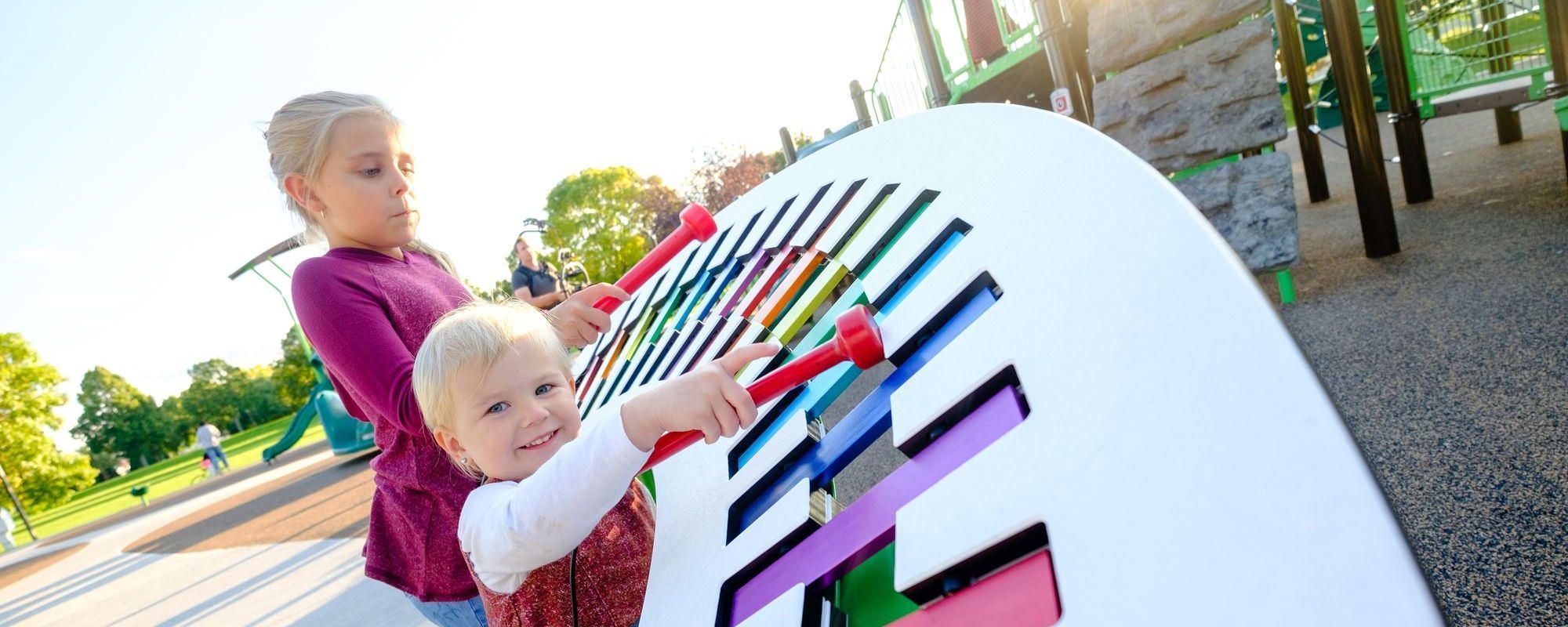
Inclusive playgrounds blend sensory-rich elements into the play experience through varied textures, visual interests, sounds, and opportunities for tactile exploration. On an inclusive playground, you’ll also find distinct areas for different types of play, from active to passive and sensory. These areas are designed to suit different play preferences and energy levels.
The result of such thoughtful sensory balance includes:
- Reduced overwhelm: Children who experience sensory processing differences can feel more at ease, allowing them to participate for longer and more comfortably.
- Greater independence: The more children learn to navigate and engage with diverse sensory experiences, the more likely they are to develop self-awareness, coping strategies, and confidence in their ability to interact with their environment.
- Improved social interaction: Communal sensory exploration within inclusive playgrounds encourages interaction and helps build social bonds.
Cognitive Inclusion
Great playgrounds are curiosity-launchers, encouraging every explorer to imagine new worlds, solve playful puzzles, and build skills that last a lifetime. By design, inclusive playgrounds encourage and inspire exploration, creative thinking, and imaginative play while supporting skills like focus and problem-solving. The focus is on empowering children of all abilities to explore, interact, and learn through play.
The Guiding Principles of Inclusive Playground Design
When designing an inclusive playground, incorporate these six guiding principles:
- Design with imagination: Encourage children to explore and expand their imaginations through pretend play.
- Encourage social inclusion: Design experiences so each child genuinely feels a sense of belonging and value.
- Give them independence: Empower children to move freely around the playground and engage in activities at their own pace.
- Provide active motion: Encourage movement, motion, and “look-what-I-can-do” moments at every turn.
- Create graduated complexity: Foster skill development by challenging children at their individual level.
- Make it fun: Design to inspire imaginary play, encourage social inclusion, empower independence, encourage active motion, and build skills through graduated complexity.
Bring Your Inclusive Playground to Life
Building an inclusive playground requires the right design and an expert partner who understands the elements and complexities involved. For decades, Little Tikes Commercial has demonstrated its deep commitment to authentic inclusion. You’ll see this commitment in comprehensive, integrated play solutions, which prioritize diverse cognitive, sensory, and physical engagement.
Let’s partner to bring your vision of inclusive play to life — explore inclusive playground equipment from Little Tikes Commercial or find a rep for a personalized design consultation.