
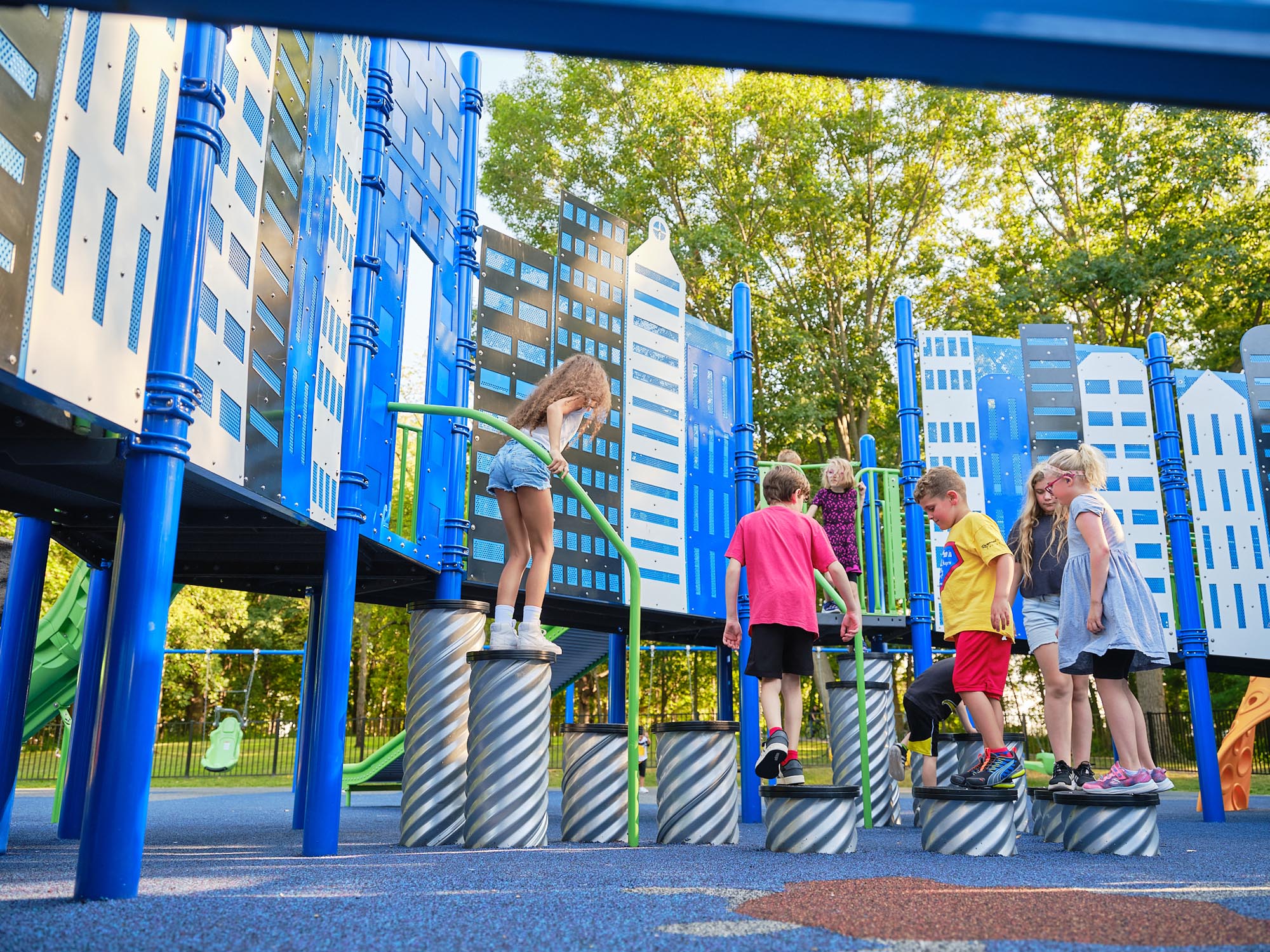
The Developmental Impact of Themed Play Environments
Kids learn and grow by interacting with the world around them, and the quality of their surroundings determines developmental outcomes. Standard playground equipment lets kids burn off energy and improve their strength and coordination, but play areas designed with intentional themes create invaluable mental engagement by shifting kids from passive movement to active interpretation.
Daydreams can take flight in a playground with an understandable narrative. A slide becomes an escape route, and a climbing wall transforms into a snowy mountain face. The transition from object to story simultaneously activates multiple developmental pathways, building problem-solving capacity, vocabulary, social collaboration, and motor skills.
Research confirms what designers have observed — themed play environments provide an opportunity for mental and physical skill-building.
How Themed Environments Activate a Child’s Mind
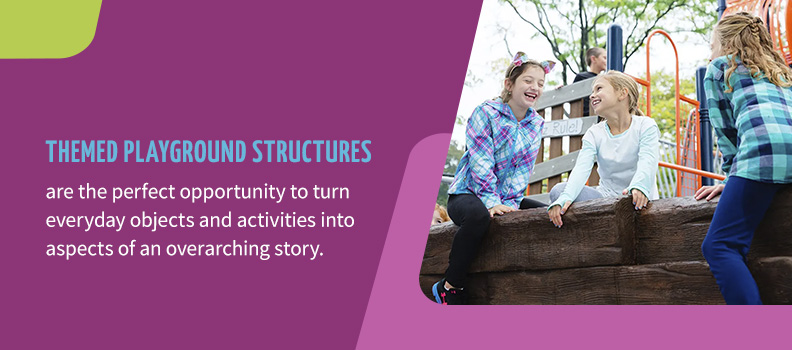
Context determines how much playgrounds support early development by changing how the brain processes experiences. Themed playground structures are the perfect opportunity to turn everyday objects and activities into aspects of an overarching story.
When kids enter spaces built around central concepts — such as a pirate ship or space station — their brains flip into imagination mode, where they assign meaning within the context of the games they develop. While traditional playgrounds give kids a place to move, themed playgrounds inspire them to use their powers of invention and ask questions.
Imaginative play activates the brain differently by giving meaning to physical actions. While climbing, kids may imagine they are exploring a hidden jungle. While sliding, they might pretend they are escaping from rival treasure hunters. Or, a simple play panel could become a control board that saves the mission. It’s easy to see how themed playgrounds help kids’ development when each physical movement links with an interpreted story in real time.
Fostering Advanced Social Skills Through Collaboration
In themed environments, kids tend to play with each other instead of near each other. When a shared story pulls kids into the same world, like being on a submarine or exploring a volcano, the narrative creates shared goals and experiences. Kids naturally begin assigning roles, setting rules, and working toward outcomes together.
Educational playground structures designed with themes accelerate social skill development because the story provides a reason to collaborate. Taking turns, sharing, and accomplishing shared goals are social skills kids build early through play. The theme connects players and lowers the usual barriers to interaction.
A themed playground could encourage an introverted kid who usually hesitates to approach strangers to come out of their shell by providing context for their participation. Social learning happens more readily when kids share imaginative space rather than just being in the same physical location.
Building Empathy and Emotional Intelligence
Role-playing in a themed environment gives kids different perspectives. When a kid becomes the ship’s navigator or the forest ranger, it forces them to imagine they’re someone else. The ability to put themselves in another person’s shoes is where empathy begins, and it grows through repeated experiences of dealing with others’ feelings and perspectives.
Kids who engage in cooperative and creative play develop a stronger capacity to identify emotions, understand what caused them, and respond empathetically toward others. Themed play environments create repeated, low-pressure moments for kids to practice emotional reading skills.
For example, a kid pretending to be the ship’s captain must recognize when crew members feel frustrated by assigned tasks, while a forest ranger must notice when a fellow explorer appears anxious about crossing a bridge.
Intentional design in inclusive and accessible playgrounds shows how careful planning encourages empathy and inclusion. Play areas designed to accommodate different physical abilities teach kids that participation takes many forms. Emotional intelligence grows through exposure to diverse play experiences and interaction with kids whose capabilities differ from theirs.
Developing Higher-Order Abstract and Creative Thinking
Abstract thinking begins when a kid looks at a play area and decides that a specific structure represents a mountain or a motorbike. Using one object to symbolize another is a foundational cognitive skill that develops mental skills and prepares kids for complex reasoning tasks in school.
Symbolic thinking happens naturally in a themed play environment. Each mental substitution trains the brain to hold two realities at once — the object and its imagined identity — which drives the development of complex thinking.
When problem-solving involves reacting to challenges, kids need abstract thinking to construct meaning from their environment. Themed play environments provide a framework that channels imaginative play in child development into a story-like experience, stimulating imagination.
Opportunities for symbolic thinking are the natural outcome of play. Children don’t practice abstraction because adults direct them toward it. Symbolic substitution happens because the theme encourages interpretation.
- A ship’s wheel invites steering motions.
- Kids will naturally want to peer through a telescope.
- A sliding pole evokes a kid’s inner firefighter.
The environment suggests meaning, and the kid supplies creativity to complete the transformation from equipment to experience.
Sharpening Cognitive Flexibility and Problem-Solving
Themed playgrounds generate problems that kids must think through in real time. The “rules” of the theme — the floor is lava, the spaceship needs power — require flexible, adaptive responses under changing conditions. Pretend play can support executive functions like attention and response times.
Vocabulary growth directly links to problem-solving and experiential learning. Kids in themed play contexts can build vocabulary quickly because themes give language a job. Naming ship parts, calling out commands, or describing environments turns passive word exposure into active, purposeful language use. For example, a kid who learns “starboard” in a themed ship context might be more likely to remember the word because its use has meaning and consequences while playing.
The developmental benefits of play show up organically in story-themed play. A bridge that sways requires a balance adjustment, and a climbing net demands route planning. Each obstacle kids encounter within the theme becomes a problem worth solving because the story provides motivation.
Enhancing the Full Spectrum of Motor Skills
Themed playgrounds necessitate more physical problem-solving than standard equipment. When kids envision a climbing wall as a cliff face or ship rigging, they’ll engage with playground equipment more deliberately and for longer periods.
Playground design directly shapes how kids develop balance, agility, and coordination. Areas with diverse features such as climbing elements, balance challenges, and varied terrain hone stronger motor skills than single-feature equipment.
Fine motor development is different from gross motor gains. Themed play environments incorporate small elements such as dials, levers, textured panels, and grip ropes that encourage subtle hand movements, building dexterity and hand-eye coordination. Themed elements provide unique opportunities for fine motor skill development because narrative makes kids’ interaction with them part of their story.
Designing Playgrounds as Engines for Growth
Kids who get to problem-solve in a themed play area build more skills faster than kids playing on traditional, static playgrounds. The structure provides the framework, but the theme gives the kids a reason to stay engaged long enough for development to happen.
Little Tikes Commercial designs and engineers themed play environments that naturally drive skill development through imagination. Contact us to learn how themed playground design can fit into your community and benefit the kids who will use it.