Sustainable Approaches to Custom Playground Creation
Sustainable playground equipment reduces environmental impact while supporting long-term community value. Responsible sourcing, site-aware layouts, efficient resource use, and products engineered for extended service life create sustainable playgrounds designed for durability. If you’re looking to build a custom playground with minimal environmental impact, learn more about eco-friendly playground design, approaches, and benefits in our guide.
The 4 Pillars of Sustainable Playground Design
It’s helpful to break down sustainable playground design into four categories: material selection, site integration, water efficiency, and energy management. Each pillar comes together to create an eco-friendly play space.
1. Material Selection
The materials you choose will contribute to environmental impact and playground durability. Using recycled steel and plastics, such as post-consumer high-density polyethylene, reduces your reliance on virgin materials and lowers your playground’s carbon footprint. Using green materials is one of the best and most effective ways to create a sustainable custom playground.
- Select materials with published data that show environmental impacts, such as carbon emissions.
- Use modular components that support partial replacement.
- Choose finishes that resist corrosion and ultraviolet light exposure.
2. Site Integration
One of your main goals should be to integrate playground equipment into the surrounding site. A playground should work with the environment, not against it. For example, preserving trees and natural drainage patterns means you can reduce the need for disruptive excavation work and better protect surrounding ecosystems.
Consider the following site-planning actions:
- Map tree protection areas before finalizing layouts.
- Retain existing slopes where possible.
- Limit soil export and import during construction
3. Water Efficiency
Water efficiency is influenced by surface material selection and the drainage design beneath it. Permeable surfacing options such as engineered wood fiber or certain types of rubber can help manage runoff. When paired with appropriate base and drainage design, smart surface options ease strain on storm sewer systems.
Here are some design choices that support effective drainage:
- Pair surfacing systems with appropriate subsurface layers.
- Match materials to local soil and climate conditions.
- Plan access points for long-term maintenance.
4. Energy Management
Incorporate effective playground lighting without relying on the energy grid. A great way to provide well-lit play spaces with minimal impact on the environment is to use solar-powered options. These lights have batteries that charge during sunny periods, and they provide light for hours afterward, maintaining visibility and safety across the playground.
Considering Investment Costs for Eco-Friendly Playgrounds
Planning an eco-friendly play space involves a few budgeting considerations. There are several long-term cost benefits of creating a sustainable play space, but you may need to make a few up-front investments to see that positive return on investment.
Up-Front Material Costs
Think of your playground materials as an investment. Recycled composite materials might have a higher price tag than traditional wood, but they stand strong against rot, rust, and UV rays, meaning you won’t have to replace them as often. Less disruption equals lower costs and more playtime.
To make sure you’re getting the best bang for your buck:
- Compare replacement timelines: How long will each material last?
- Review warranty coverage: What’s protected against sun and weather?
- Assess the savings: How much will you save by not replacing equipment as often?
Lower Maintenance Spend
Maintenance affects how much you spend in the long run. Powder-coated steel and rotomolded plastic are low-maintenance champions compared to timber, which needs regular painting and sealing. Keeping your playground in tip-top shape can cut down on repainting and sealing, minimize downtime, and lower costs.
Disposal and Circular Economy
What happens to playground materials when they’ve reached the end of their fun? Choosing modular components that can be replaced or recycled means less waste and a happier environment. You can replace parts, recycle materials, and reduce landfill waste to help keep the planet green.
Designing a Custom Eco-Friendly Playground
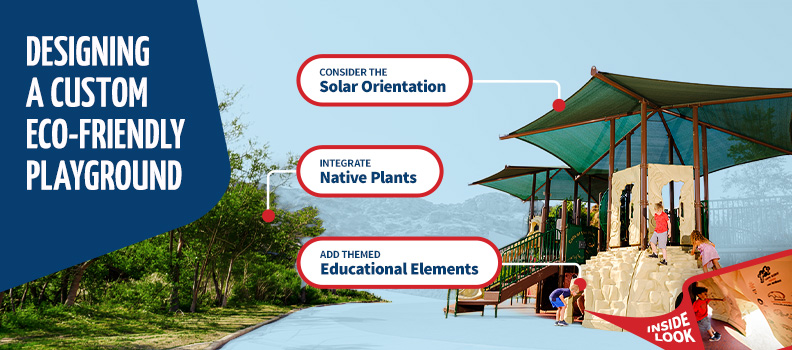
Customizing your playground can help you create a space that works better for the environment and community. Custom designs help your playground handle the local climate, blend with the landscape, and even support educational goals.
Solar Orientation
Positioning your equipment thoughtfully can make a big difference in keeping kids comfortable. Slides, seating, and shade structures placed with the sun in mind can create a cooler, safer play environment. When designing a sun-friendly playground, be sure to align shade with the sun’s path, keep high-contact surfaces out of direct sunlight, and consider local climate patterns.
Native Plant Integration
Using local plant species incorporates nature while saving water. Native plants are already adapted to the local rainfall and soil, so they need less watering. If you’re thinking of adding native plants, choose local species, use planting buffers to manage water runoff, and consider water-saving surfaces.
Themed Educational Elements
Sprinkling in some educational features adds value without taking up extra space. Custom play panels can transform learning by incorporating interactive elements right into the playground.
Here are some simple yet effective play panel ideas:
- Water cycle illustrations: Teach kids about nature.
- Material sorting games: Make learning interactive.
- Hands-on activities: Boost motor skills while having fun.
Planning Your Project Sustainability Roadmap
Having a clear plan keeps your sustainability goals on track from day one. Here are some top considerations to keep in mind as you build your roadmap:
Site Audit
Take a good look at your site to see what natural features you can build around. Slopes, trees, and shady spots can all be incorporated into your playground design. You can map slopes and drainage and identify existing plants to see what you can incorporate. Note potential issues in the landscaping so you can plan for challenges.
Certification Alignment
Setting sustainability goals early helps you meet green building credits and other requirements. Define your goals up front, coordinate with local building requirements, and confirm documentation.
Vendor Selection
The vendors you choose play a big role in your playground’s environmental impact. Look for companies that prioritize responsible material sourcing and production.
When choosing vendors, you should check for environmental certification and ask about their sustainable practices. You’ll also want to consider their transparency — where do their materials come from, and are they clear about it?
Long-Term Sustainability in Playground Design
Sustainable design is all about making choices that reduce waste and save resources over the long haul. Durable materials and modular construction mean green playgrounds that last longer and need less repair.
Little Tikes Commercial is committed to sustainability through recycled materials and long-lasting playground systems. With careful planning, you can create an eco-friendly playground that kids will enjoy for years to come!
Request a quote to explore how sustainable design and durable construction can benefit your playground project.